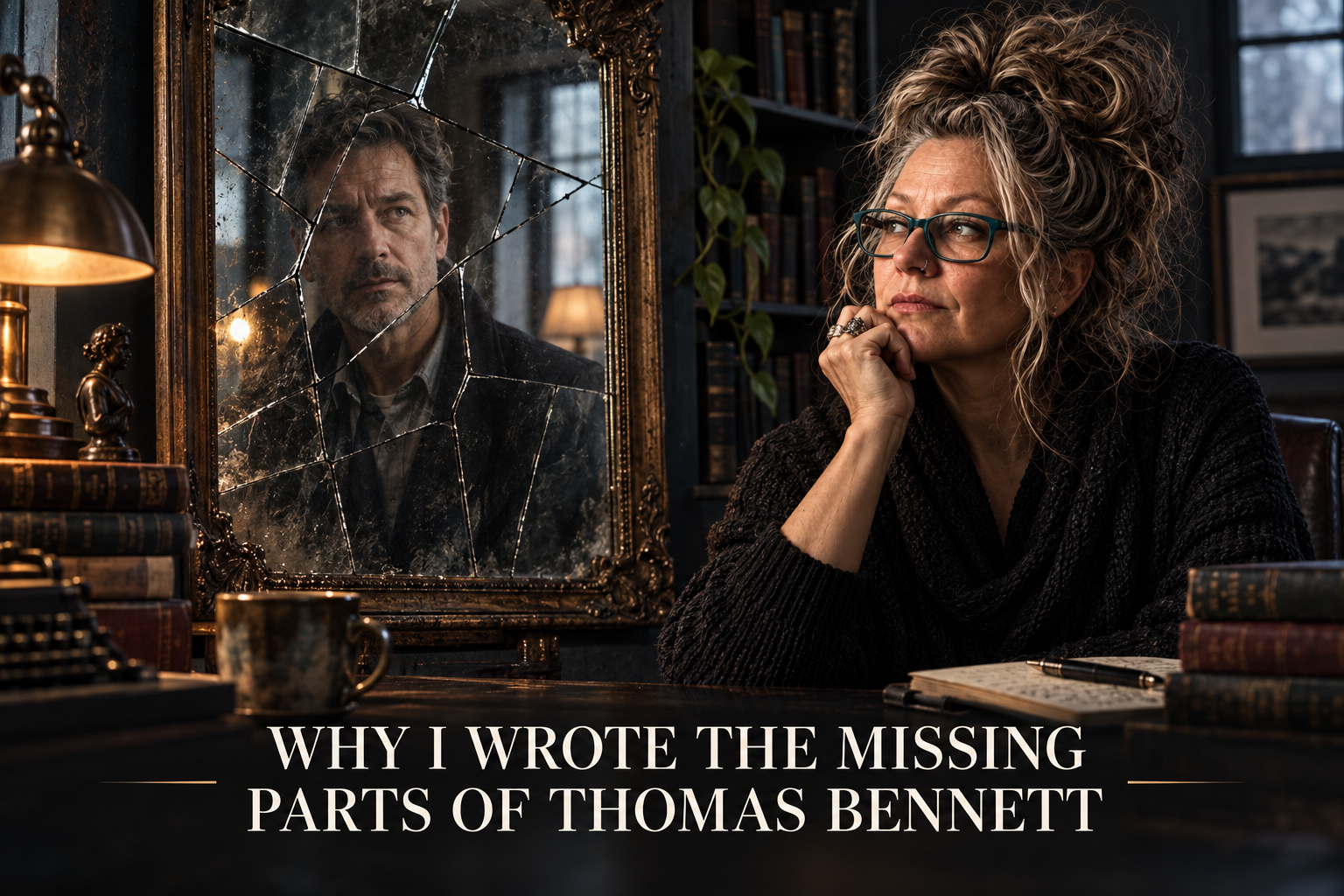
There were really two reasons I wrote The Missing Parts of Thomas Bennett. One was psychological. The other was considerably less noble.
I wanted to see whether I could make readers care about a killer, and while I was there, I also took the opportunity to fictionalise the demise of somebody who had seriously annoyed me.
Writers need hobbies.
The short answer: I wrote The Missing Parts of Thomas Bennett to explore how far a reader's sympathy can stretch—whether we can understand and even care about somebody while still being horrified by what they have done.
How Far Can Sympathy Stretch?
The part that interested me most was not the crime itself. It was the reader. I wanted to know what would happen if I gave people enough time with Thomas before they understood everything about him.
Could they worry about him? Could they feel sorry for him? Could they become invested in what happened to him? And then, once they knew what he had done, would those feelings simply disappear?
That fascinated me because human beings are rarely as tidy as fiction sometimes makes them. We like to imagine there are good people and bad people, and that once somebody crosses a certain line our feelings about them should become very straightforward.
But they often do not.
You can care about somebody and be horrified by them. You can understand how someone became the person they are without believing that excuses what they did. You can feel sympathy for somebody who has caused terrible harm.
Those feelings can exist in the same place, and I wanted to explore that uncomfortable little gap.
I Didn't Want Thomas to Feel Like “The Killer”
I never wanted Thomas to walk onto the page carrying a giant invisible sign saying THIS MAN HAS DONE SOMETHING TERRIBLE. That would have ruined the entire point.
I wanted him to be a person first: confusing, damaged, sometimes sympathetic and sometimes frustrating. Someone whose story the reader would naturally start trying to piece together.
The missing parts mattered because I wanted the reader constantly adjusting their understanding of him. You think you know something, then another piece appears and suddenly something you interpreted one way looks completely different.
That is much closer to how we experience real people. Nobody introduces themselves by handing over a complete psychological file. We get fragments. We make assumptions. Sometimes we are right. Sometimes we are spectacularly wrong.
Could You Still Care Once You Knew?
That was the experiment underneath the whole book. I wanted to take the reader far enough into Thomas's life that discovering the truth would create a problem for them.
Not simply: Oh. He is bad. I no longer care.
I wanted something messier.
Because if you have already felt compassion for somebody, what happens when you learn something about them that should make that compassion difficult? Does understanding disappear? Should it? Can you condemn an action without completely losing sight of the human being who committed it?
I was not interested in answering those questions for the reader. I just wanted to put them there and leave people sitting with them.
Then There Was the Other Reason
This is where the lofty psychological experiment becomes slightly less impressive.
Somebody annoyed me. Quite a lot, actually.
And one of the strange privileges of being a fiction writer is that irritation is remarkably recyclable. You cannot generally dispose of troublesome people in real life. There are laws. Apparently.
But fiction offers considerably more flexibility.
A mannerism can be borrowed. A phrase can be stolen. An irritating habit can suddenly belong to a character. And occasionally somebody who has got thoroughly on your nerves can inspire a fictional fate that is disproportionately satisfying.
No names. No identifying details. No witness statements required.
Just literature.
Writers Steal Bits of Everybody
Most characters are not one person. At least mine are not. They are mixtures.
A behaviour from one person. A sentence somebody once said. A look. A habit. A piece of somebody's history. Something overheard years ago that the brain inexplicably kept.
Then imagination fills in the enormous gaps between them. Eventually the fictional person becomes their own creature entirely.
That is one of my favourite things about writing. Real life provides little scraps and fiction rearranges them.
Sometimes beautifully. Sometimes horribly. Sometimes with a suspiciously satisfying death scene.
Thomas Became More Complicated Than I Expected
The more I wrote him, the less interested I became in whether the reader would simply “like” Thomas. That felt too easy.
I became much more interested in whether they would understand him. Whether they would feel something for him even when they wished they did not. Whether they would find themselves defending him internally and then suddenly wonder why they were doing it.
That is a far stranger reaction than simply liking a protagonist, and much more interesting.
Because Thomas is not really a test of whether readers approve of somebody. He is a test of what happens when approval and empathy become completely separate things.
The Parts We Do Not See
The title eventually became important for that reason too.
Everybody has missing parts. Things we do not tell people. Things other people misunderstand. Things we hide deliberately. Things we do not fully understand about ourselves.
With Thomas, those gaps are more dangerous, but the basic idea is familiar. We build pictures of people from incomplete information every day.
Then sometimes one new piece changes the entire picture.
That is what I wanted the story to keep doing. Not giving the reader a neat answer too early. Not telling them what to feel. Just handing them another piece and watching everything shift.
So Why Did I Write It?
Partly curiosity. Partly psychology. Partly because I wanted to play with how sympathy works. And partly because somebody annoyed me and fiction presented an opportunity that was simply too tempting to waste.
But somewhere along the way, Thomas became bigger than the joke that helped spark part of the story.
He became a character I wanted readers to struggle with. Not necessarily to like. Not necessarily to forgive. Just to keep thinking about.
Because the characters who stay with us are rarely the ones who are easiest to understand. They are usually the ones who leave us arguing with ourselves long after the book is closed.
Think someone could use this?
If this made you think of someone, share it with them. Sometimes the right words find people at exactly the right time.
Read the book
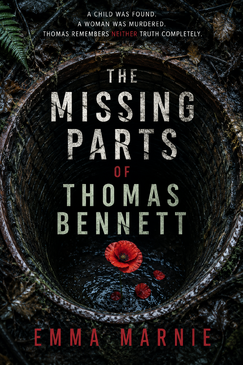
The Missing Parts of Thomas Bennett
Thomas Bennett has been missing for fourteen days. As the pieces of his life begin to surface, every new answer changes the man readers thought they understood.
Author of The Missing Parts of Thomas Bennett
Follow Mills & Burch Publishers on Facebook →