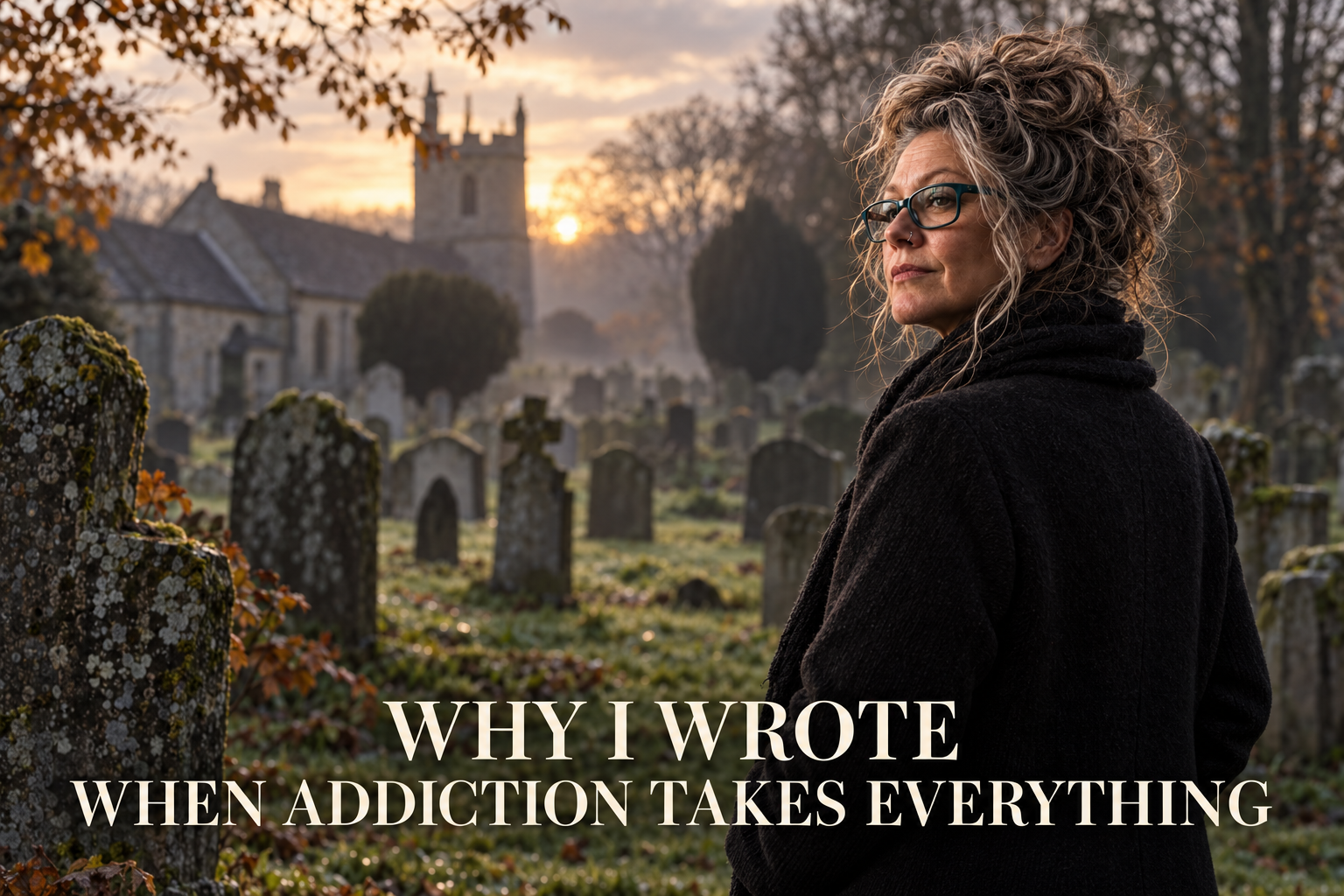
When Addiction Takes Everything is built from real lives, real losses and real consequences. Names and identifying details have been changed to protect the people behind the stories.
I wrote it because I wanted to show how far addiction can take an ordinary person.
Not a stereotype or some dramatic character created to frighten people. Just a person with a normal life, responsibilities, relationships and all the usual things they care about.
Then, slowly and almost without being noticed, those things begin to shift.
What once seemed unacceptable becomes explainable. What once seemed impossible becomes something that has happened more than once.
Promises are made and genuinely meant. Then they are broken.
People forgive until they stop believing. Families begin adapting around behaviour they would once have found shocking, while the person at the centre can still be telling themselves that things are not really that bad.
The short answer: I wrote When Addiction Takes Everything to show how quietly addiction can enter an ordinary life, how far its consequences can reach and why the human being underneath it must never be reduced to a stereotype.
How Far Addiction Can Go
That is what struck me most in so many of these true stories.
Addiction can take an enormous amount before the full scale of the damage becomes visible. A career can go. A relationship can go. Trust can disappear.
Children can become frightened or confused. Families can become exhausted. People can lose their dignity, home, health and sense of who they once were.
Sometimes, by the time everything is finally obvious, an enormous amount has already been lost.
I wanted to show that distance: the space between the beginning and the point where somebody looks at their life and barely recognises it.
Because addiction does not usually arrive looking like disaster. It can grow quietly inside an ordinary life.
Addiction Does Not Have One Face
I did not want to write about addiction as though everybody affected by it becomes the same person. They do not.
That was another thing these stories showed me. Addiction does not have one face.
It can be the person who still gets dressed properly and goes to work. The parent trying to hold a family together. The person everybody thinks is coping.
It can be somebody who believes they are nowhere near “bad enough” for anyone to worry about—the person who looks fine from the outside while life behind closed doors becomes increasingly difficult to hold together.
That mattered to me because it is easy to imagine addiction as something that happens only to a certain kind of person.
The stories I knew did not fit neatly into that idea.
These Were People, Not Horror Stories
I did not want the book to become a collection of horror stories. That was never the point.
The people behind these experiences were more than what happened to them. They had humour, pride, families, memories, jobs, friendships, hopes and histories.
Some were loved deeply. Some caused enormous hurt. Sometimes both things were true at once.
That contradiction is part of what makes addiction so difficult to understand from the outside. A person can love somebody and still damage them.
They can genuinely regret something and later do it again. They can mean every promise they make and still be unable to keep it.
That does not make the consequences disappear, but it makes the reality more complicated than simply dividing people into good and bad.
I wanted that complexity to remain in the book.
I Could Not Write It as an Outsider
My own experience belongs in this book too.
I have known alcohol from different sides of the same story: as a child frightened by it, as an adult who used it to cope with pain, and later as somebody who had to recognise that old patterns were beginning to creep back into my own life.
I could never have written this book as an outsider looking in. That would have felt dishonest.
Some of the stories came from people I knew through Alcoholics Anonymous. Others came from things I witnessed or experiences I understood far more personally than I would have liked.
Together, they became a picture of just how widely addiction can reach—not only into one person's life, but through entire families, friendships and generations.
What I Wanted the Book to Show
That is what I wanted When Addiction Takes Everything to show.
Not what an “alcoholic” looks like. Not a lesson or a warning delivered from a pedestal.
I wanted to show how far an ordinary human life can move from where it began. How much can change, how much can be lost and how slowly the unacceptable can become normal.
Underneath all of that, there is still a person whose life was once made up of far more than addiction.
That is the part I wanted to keep visible.
Because the stories that stayed with me were never really about alcohol. They were about people.
Think someone could use this?
If this made you think of someone, share it with them. Sometimes the right words find people at exactly the right time.
Read the book
When Addiction Takes Everything
Real experiences of alcohol, relapse, hidden pain and the consequences addiction leaves across individuals and families—told without reducing the people behind them to their worst moments.
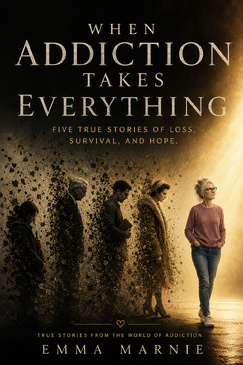
Author of When Addiction Takes Everything
Follow Mills & Burch Publishers on Facebook →