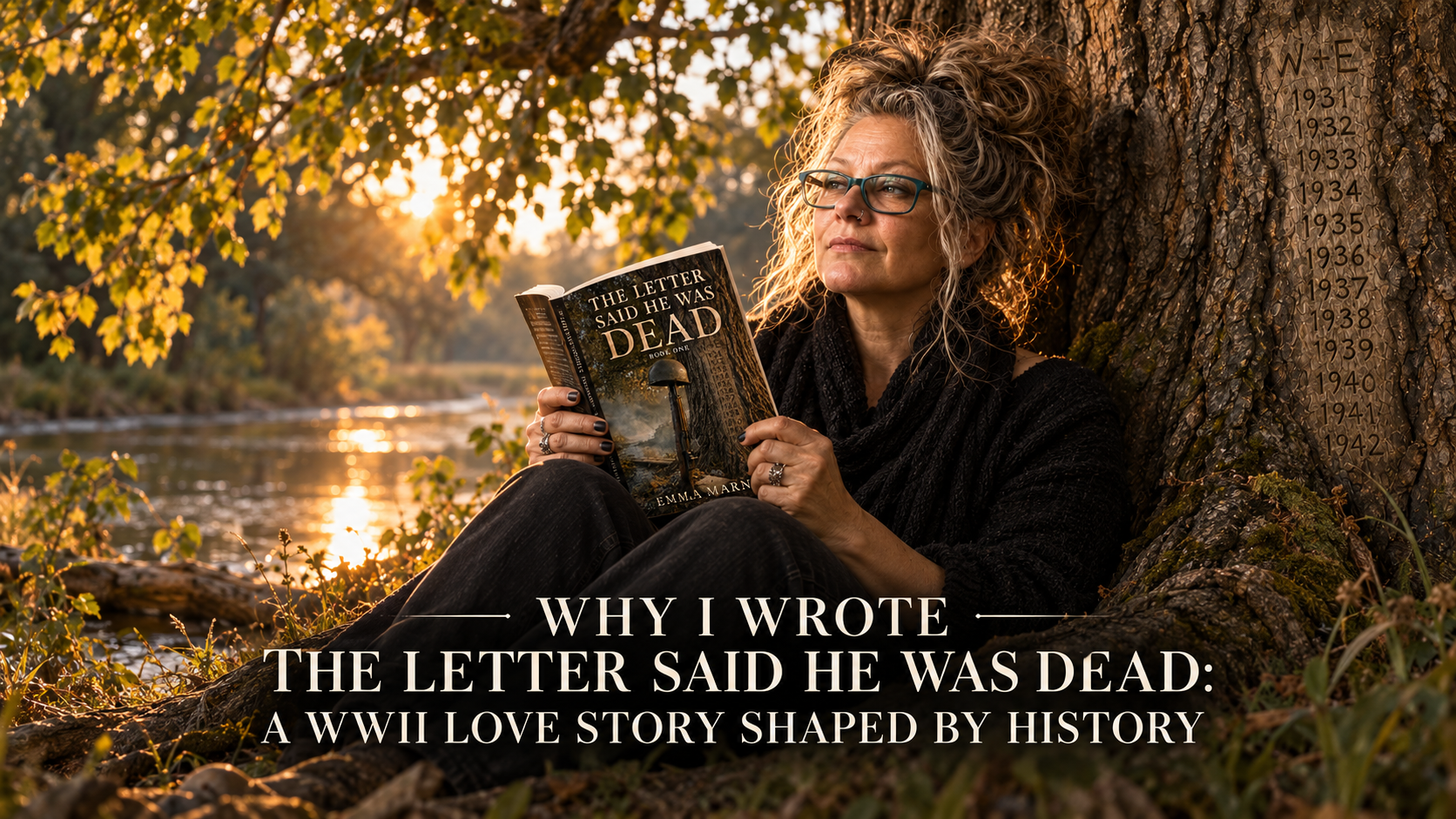
Some books begin with a grand plan.
The Letter Said He Was Dead did not.
It began with a small idea about love, separation and a woman being told that the man she loved had died during the Second World War—when the truth was far more complicated.
There was no enormous chapter plan sitting beside me, no carefully mapped timeline and no wall covered in red string. I simply began writing, and then the story started asking questions of its own.
The short answer: I wrote The Letter Said He Was Dead because I wanted to explore what happens when war separates two people who still love each other, false information changes the course of their lives and history refuses to give them an easy way back.
One Question Led to Another
Once I had the basic idea, I needed to know whether it could realistically work.
If a man disappeared during the Second World War, what might have happened to him? How quickly would news travel? What would his family be told? How long could somebody remain missing, and what happened to prisoners of war when the fighting ended?
Then there were the people left behind. What would life have looked like for a woman waiting for news? How long could she reasonably keep hoping? At what point would she be expected to accept what she had been told and begin building a different future?
Every answer created another part of the story. That was when the research stopped being something supporting the book and became one of the forces shaping it.
I did not want the war to be a vague backdrop decorated with a few uniforms, telegrams and worried expressions. If the story was going to sit inside real history, that history needed to make sense.
I researched wartime communication, military timelines, capture, imprisonment, delayed repatriation and the difficult process of returning home after years away. Some parts of the story could be invented freely. Others had to obey the realities of the period.
Strangely, I loved that.
Historical Research Made the Story Better
There is a temptation to think historical research restricts a writer's imagination. For me, it did the opposite.
The facts created things for the story to push against: delays, distance, uncertainty and long stretches in which characters could not simply pick up a telephone and solve everything in five minutes.
Those limitations made the emotions stronger.
The war did not merely provide scenery. It controlled what people could know, when they could know it and what choices were available to them. Letters could be delayed or lost. Official information could be incomplete. Families could be left waiting while decisions were made elsewhere by people they would never meet.
That mattered because the whole story depends on people making life-changing decisions with incomplete information.
When the information they receive is wrong, everything changes.
At the Centre of the Story Was Love
Underneath all the history, I knew what I really wanted the book to be about: a bond that could survive almost anything.
I wanted Will Watt and Evie Tovey to share the kind of connection that does not simply disappear because time has passed or circumstances have changed. Not perfect love and certainly not easy love, but something deeper—the kind of love that becomes part of who you are.
They are separated by war, distance, misinformation and eventually by years of life continuing without either of them knowing the whole truth.
That was the question at the emotional centre of the book: what happens when two people are pulled apart not because their love failed, but because history got in the way?
What happens when life forces somebody to carry on? And what happens when the person you mourned is suddenly no longer dead?
I Did Not Want an Easy Wartime Romance
I never wanted this to become a simple story in which two people are separated, wait faithfully and then run into each other's arms at the end.
Life is messier than that.
People have to survive. They make decisions based on what they know at the time, build new lives and form new loyalties. They often choose what seems sensible because the alternative would mean standing still forever.
That is what makes Will and Evie's story painful. Nobody needs to be a villain because sometimes circumstances are enough.
Evie's life has to continue because she believes Will is dead. Will's life becomes defined by capture, survival and separation from the world he once knew. By the time their lives begin moving towards each other again, neither of them is exactly the person they were before.
And yet something between them remains.
That was the love story I wanted to write—not a romance untouched by time, but one that had been tested and altered by it.
Bellweather Began to Feel Real
The story grew gradually. One scene suggested another, one piece of research revealed a new possibility and one historical detail changed the direction of something I thought I had already planned.
A character would make a decision and, quite inconsiderately, create another problem for me to solve.
Bit by bit, the story became larger. Bellweather, Kansas, began to feel real. Main Street, Stanforth's Drugstore and the people surrounding Will and Evie became more than background details.
The war also stopped feeling like something happening far away. Its consequences reached into ordinary homes, interrupted relationships and altered entire lives.
Eventually, the small thought I had begun with had grown into a much bigger story than I expected—one involving love, duty, survival, marriage, parenthood and the terrible consequences of believing something that was not true.
The Message That Changed Everything
The title became important because the message declaring Will dead represents the moment when Evie's life divides into two.
Before it, she has one future. After it, she has another.
That idea fascinated me because all of us make enormous decisions based on the information available to us. We trust letters, telegrams, officials, records and the people delivering the news.
Most of the time, we have no way of checking the truth for ourselves.
A single message can change the course of somebody's entire life. It can determine whether they wait, grieve, marry, move away or attempt to begin again.
In this story, the information Evie receives is devastating.
It is also wrong.
Love, Loss and the Lives Built in Between
The emotional difficulty was never simply whether Will and Evie still loved each other. Love alone does not erase the years that have passed or the lives built during them.
By the time the truth catches up with them, other people matter. Promises have been made. A child exists. Loyalty is no longer simple, and nobody can return neatly to the moment before the message arrived.
That was important to me because I did not want love to behave like a magic key that unlocked every problem.
Love can endure and still cause pain. It can remain true even when life has made acting upon it almost impossible.
Sometimes the hardest love stories are not about whether two people belong together. They are about what belonging together could cost everyone else.
Why I Kept Writing
More than anything, I wanted The Letter Said He Was Dead to feel like a love story shaped by history rather than merely placed inside it.
The research gave me the framework. The Second World War created the separation, uncertainty and impossible choices. But Will and Evie gave me the reason to keep writing.
Their story became one of time, loss, survival and the strange way love can remain even when everything surrounding it has changed.
Some books begin with an enormous concept. This one began with a very small thought, and I followed it.
Somewhere along the way, it became a story about two people, a war, a devastating piece of false information and a bond that refused to disappear.
Think someone could use this?
If this made you think of someone, share it with them. Sometimes the right words find people at exactly the right time.
Read the book
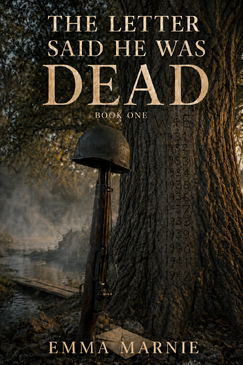
The Letter Said He Was Dead — Book One
Childhood sweethearts Will and Evie build a life together before the Second World War tears them apart—and one devastating message changes everything they thought their future would be.
Author of The Letter Said He Was Dead
Follow Mills & Burch Publishers on Facebook →