Some books start with a plot.
Others start because you discover the history of a real place and your brain immediately says, well, that's unsettling. We're definitely using that.
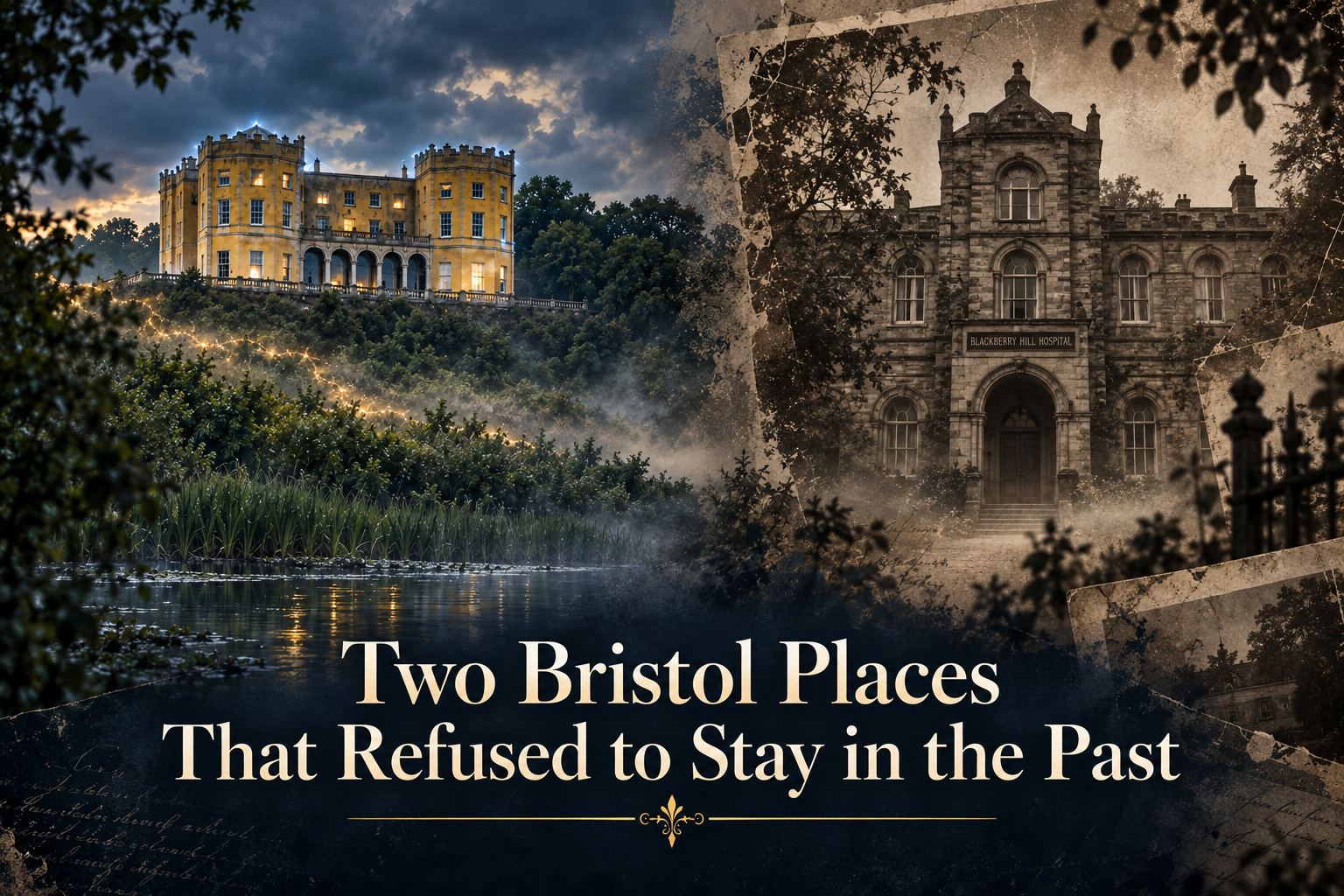
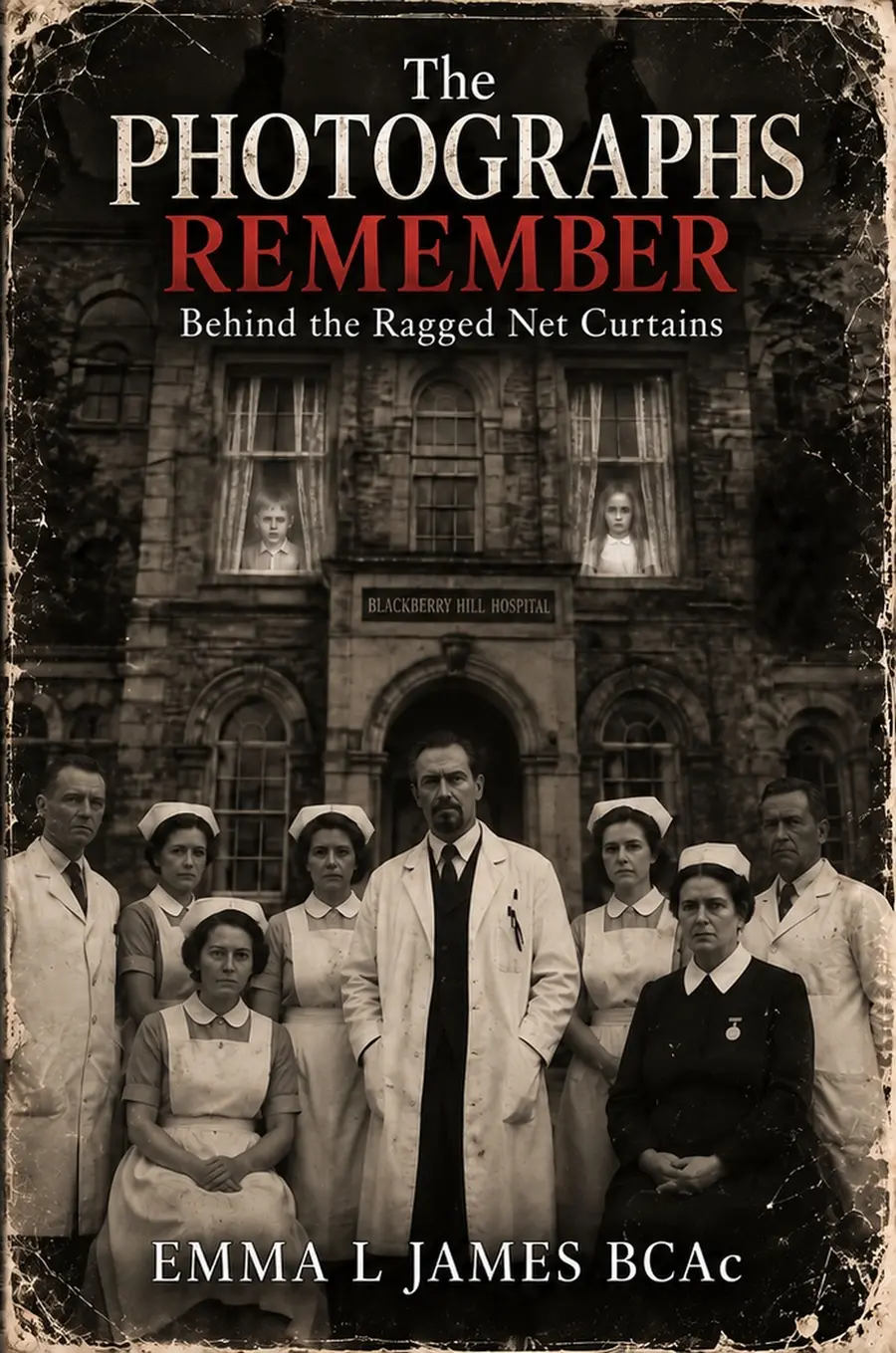
That is what happened with two books linked to two very different Bristol sites: Dower House at Stoke Park, and Blackberry Hill, which became the setting behind the photographs story by Emma James.
Think someone could use this?
If this made you think of someone, share it with them. Sometimes the right words find people at exactly the right time.
Two Bristol stories
Real places beneath the fiction
Two supernatural novels inspired by places whose histories never feel entirely finished.
The Yellow House by the M32
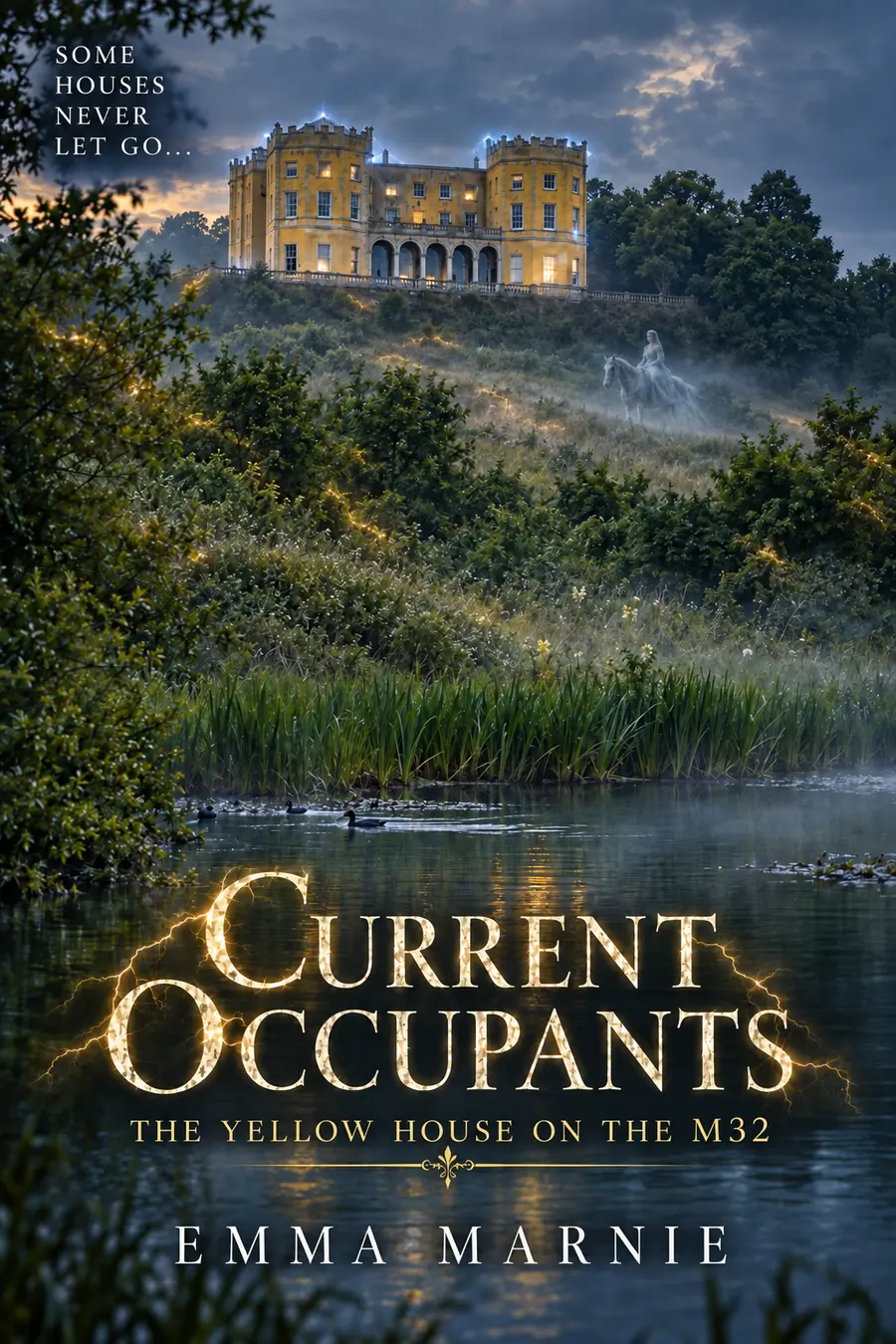
Anyone who has driven into Bristol on the M32 has probably noticed the huge yellow house sitting above Stoke Park.
It looks almost absurdly grand beside a motorway, but it was there centuries before the traffic. Over the years, the house and estate became tied to institutional care and later hospital use.
But for me, the fascination with that house is also personal.
My nan's brother, Cyril, was treated there and underwent ECT treatment. Knowing that meant the house was never just a strange old landmark on the hill to me.
Every time I passed it, I found myself looking up at it and thinking about what had happened inside those walls.
That is probably why it kept catching my attention long before I decided to turn it into a story.
Eventually, that fascination became Current Occupants – The Yellow House on the M32.
I did not want to write a straightforward haunted-house story. I was more interested in the idea of a building that had absorbed decades of lives, treatments, fear, hope and memory.
And then my brain went one step further.
What if the building did not just remember people? What if the electricity did too?
That became the heart of the story.
Blackberry Hill Had Its Own Stories Waiting
Then there is Blackberry Hill.
That part of Bristol has its own long and unsettling history tied to institutions, hospitals and mental-health care. Old records, photographs and stories from those places give you a glimpse of real people who might otherwise have disappeared completely from memory.
Those photographs are particularly haunting.
Not because they were created to frighten anyone, but because you can look into the face of someone who lived more than a century ago and know almost nothing about what happened to them after the shutter clicked.
That atmosphere fed into the photographs story by Emma James.
And then there is another piece of local history that has stayed in Bristol's memory for decades.
The Babes in the Wood
In 1957, two young Bristol children, June Sheasby and her brother Royston, disappeared after leaving home.
Their deaths became known through the terrible case often referred to locally as the Babes in the Wood murders.
Their bodies were eventually found near Snuff Mills after a huge search, but the case was never solved.
It is the sort of story that becomes part of a place.
People who were not even alive when it happened still know about it. A woodland path stops being just a woodland path. An old photograph stops being just an old photograph.
And that is the strange thing about writing fiction around real places.
Sometimes history has already done that for you.
Two Books, Two Authors, Real Places Beneath Them
My Dower House story and Emma James's Blackberry Hill photographs story are fiction.
The ghosts, characters and supernatural events belong to the books.
But underneath both stories are real places, real histories and real people whose lives left traces behind.
That is probably why places like these stay with us.
You can close the book. You can tell yourself it was only fiction.
Then you drive down the M32, look up at that yellow house on the hill, and remember that for people like Cyril...
that part was real.